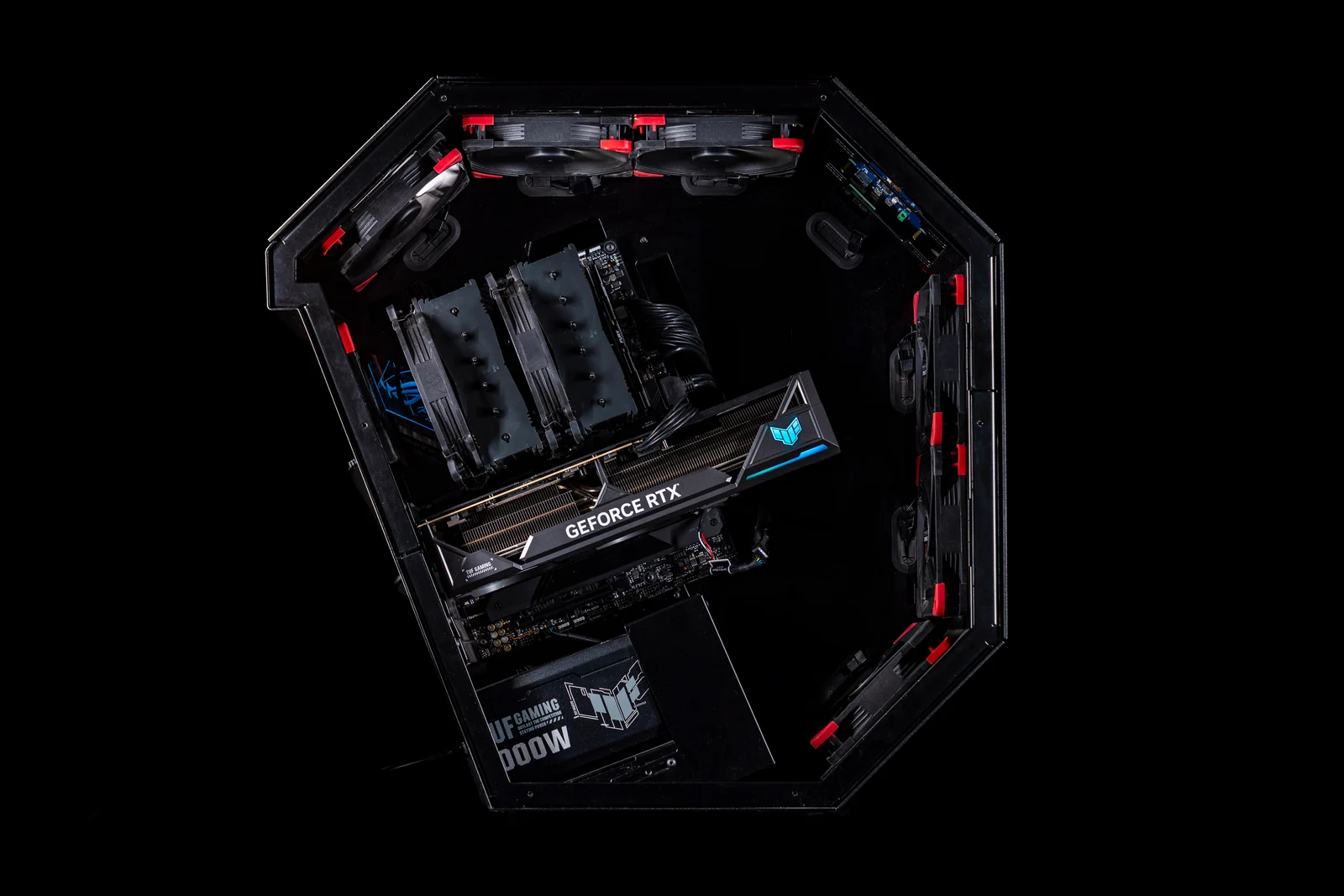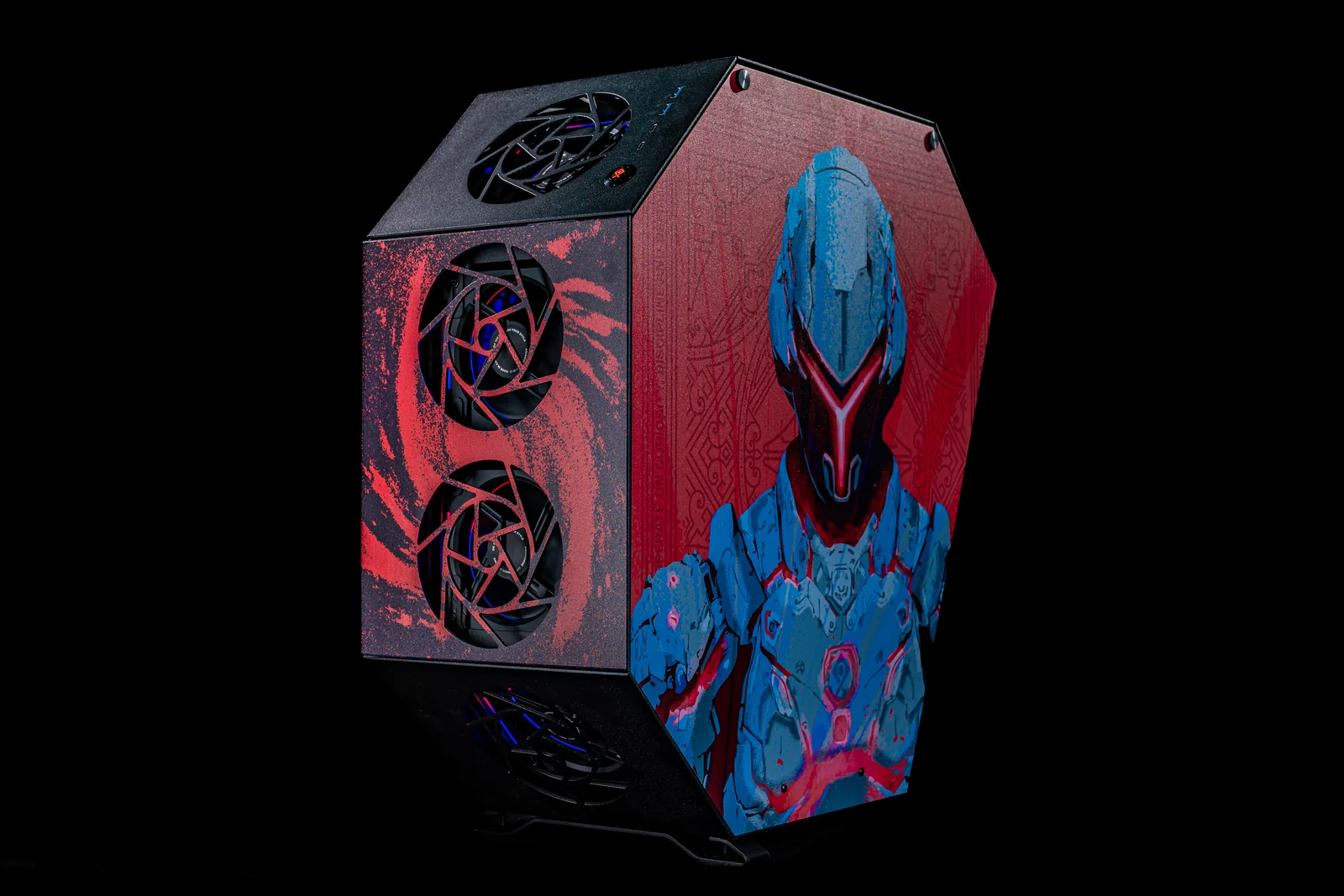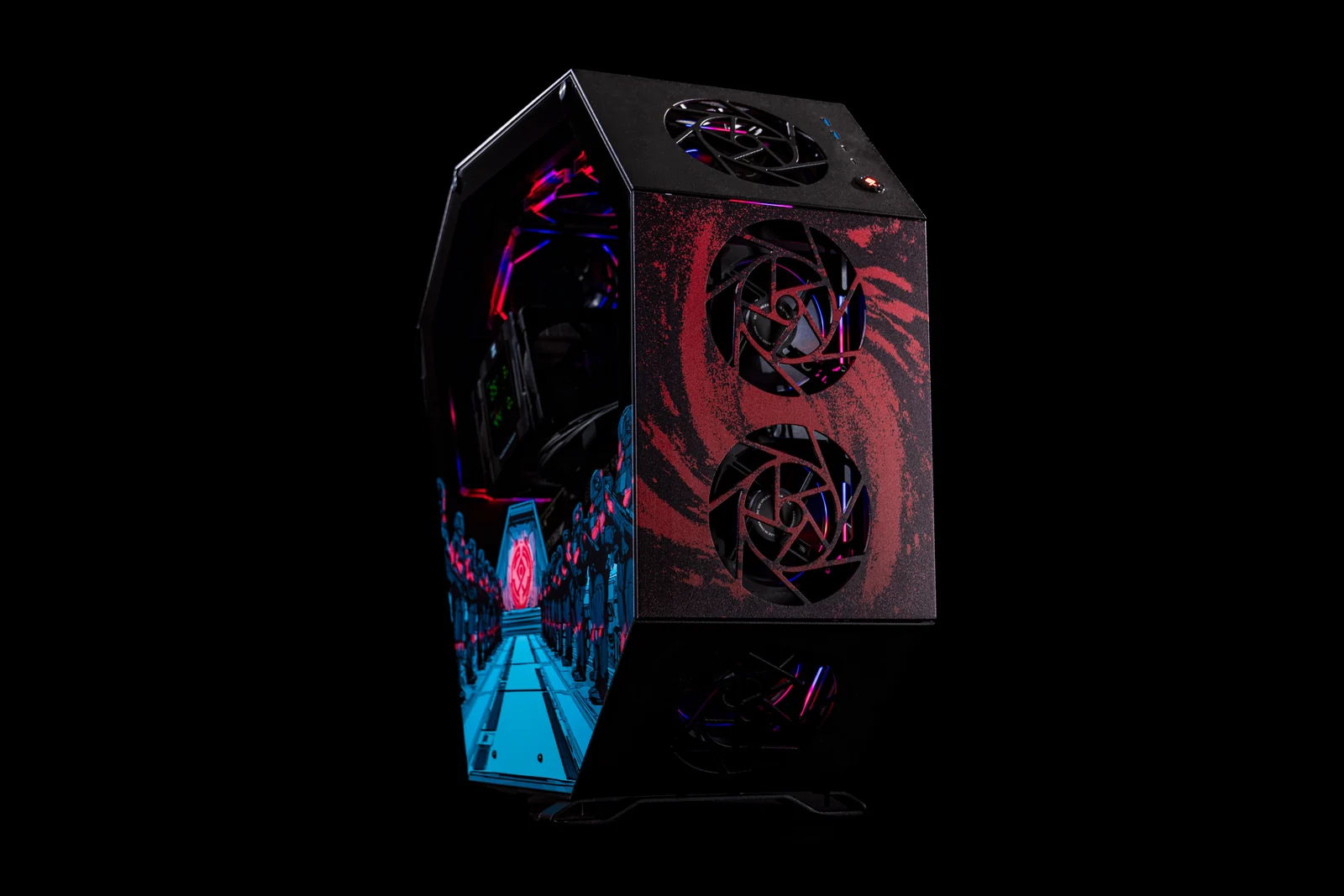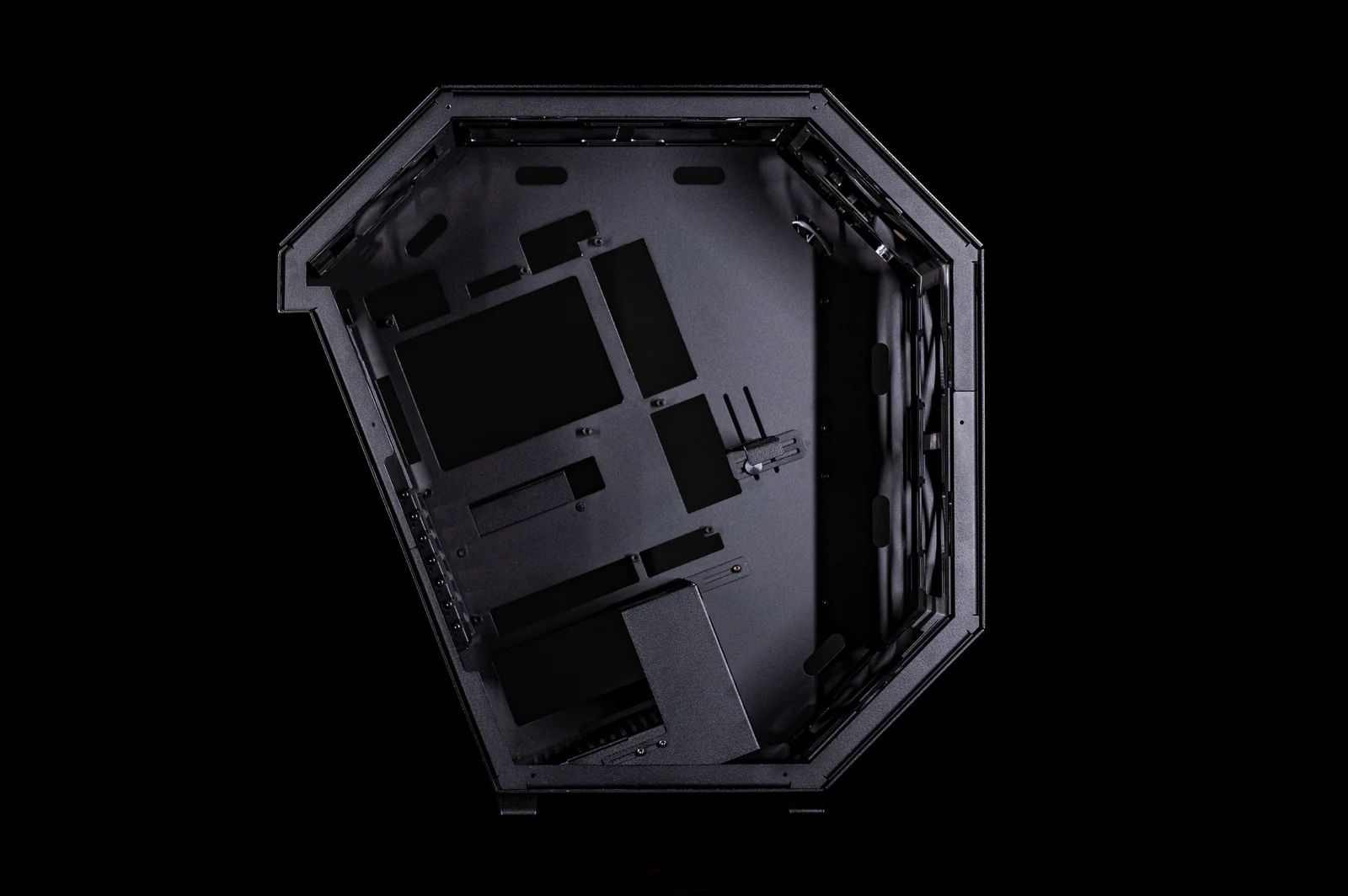
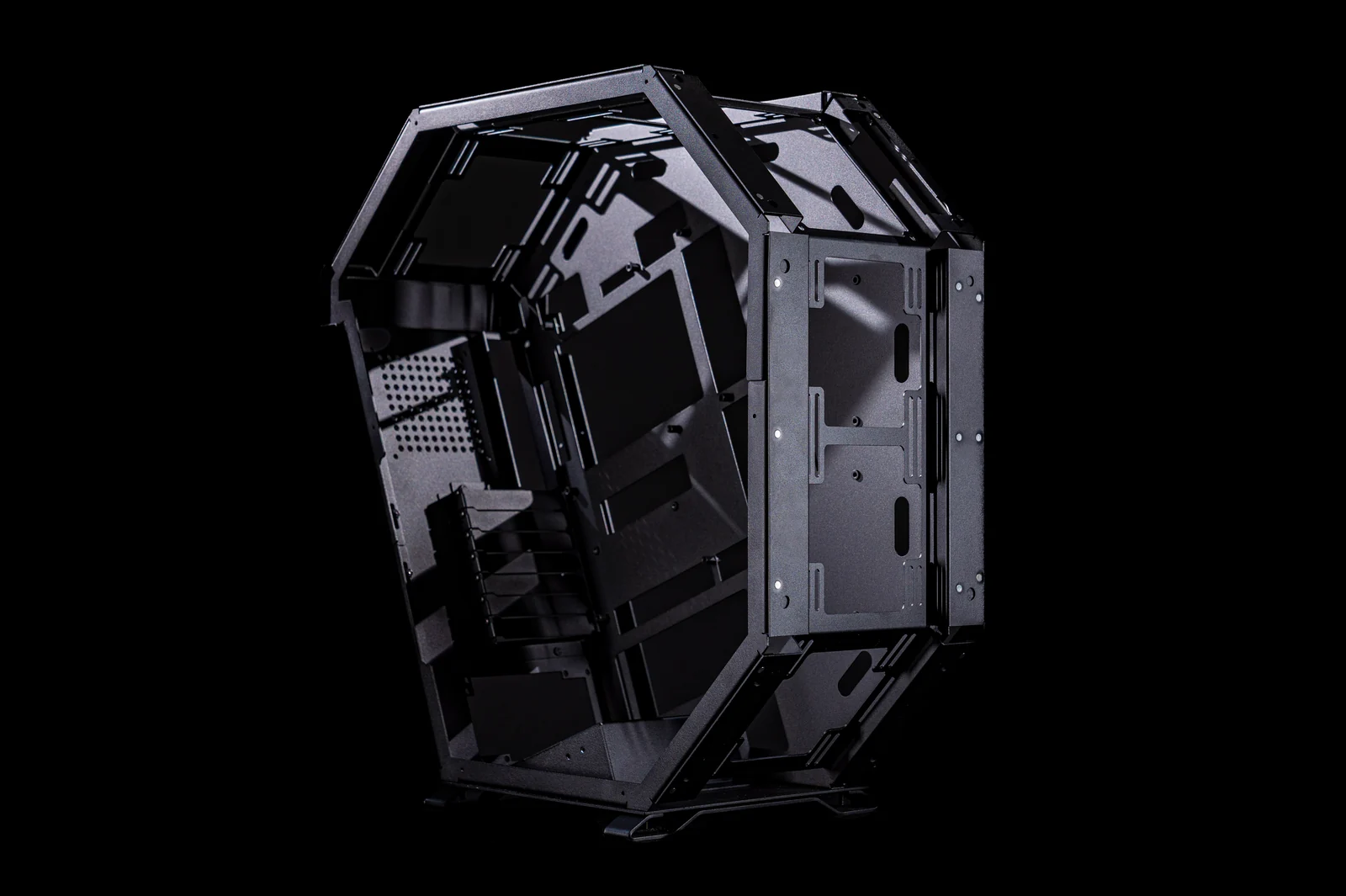
Octa V1 with the glass side panel off, seen from the front corner.

Octa V1

The shape is the cooling

Tap a part

Octa V1

The shape is the cooling

A modular PC case. Angled walls and corner fans aim cool air straight at your parts.

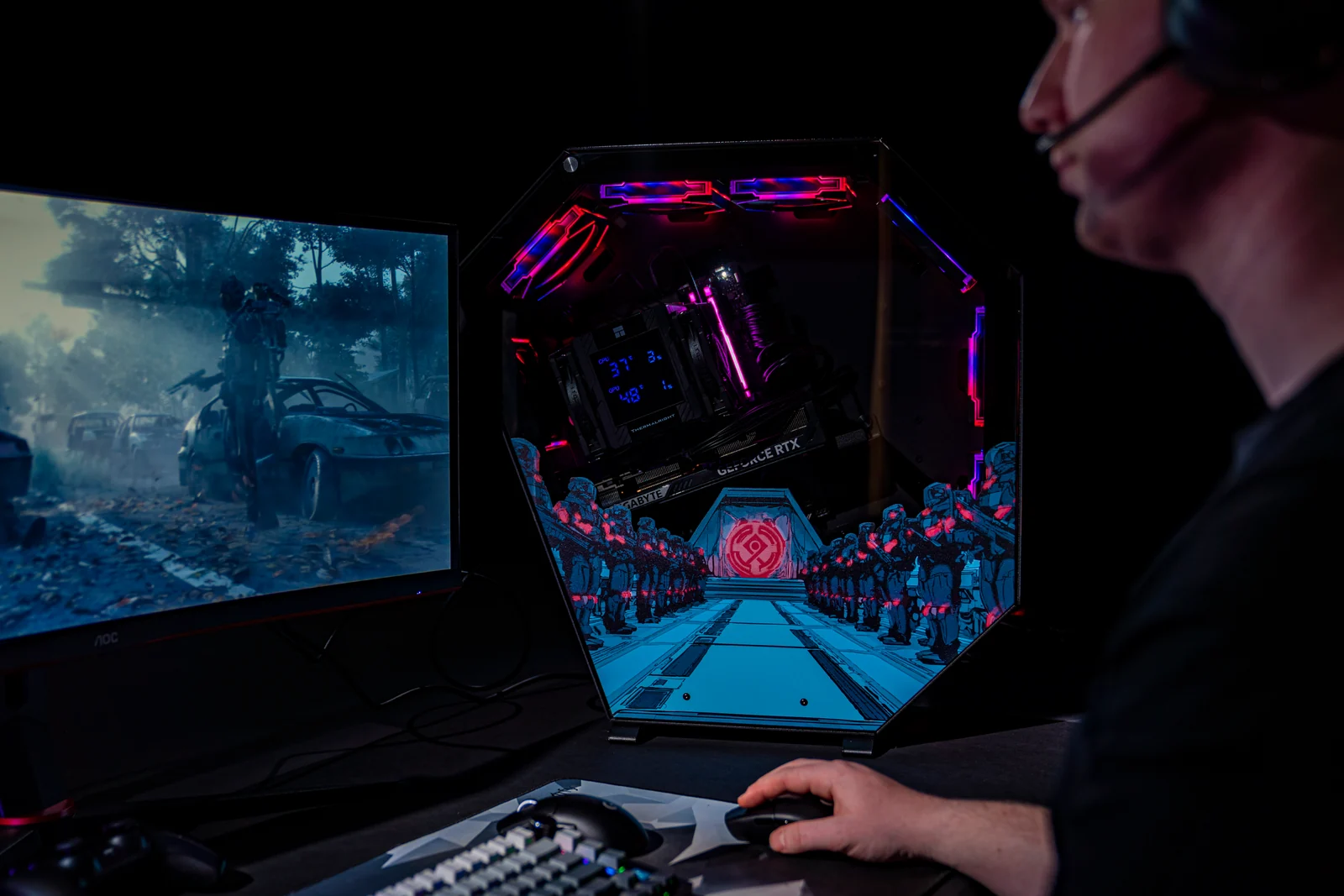
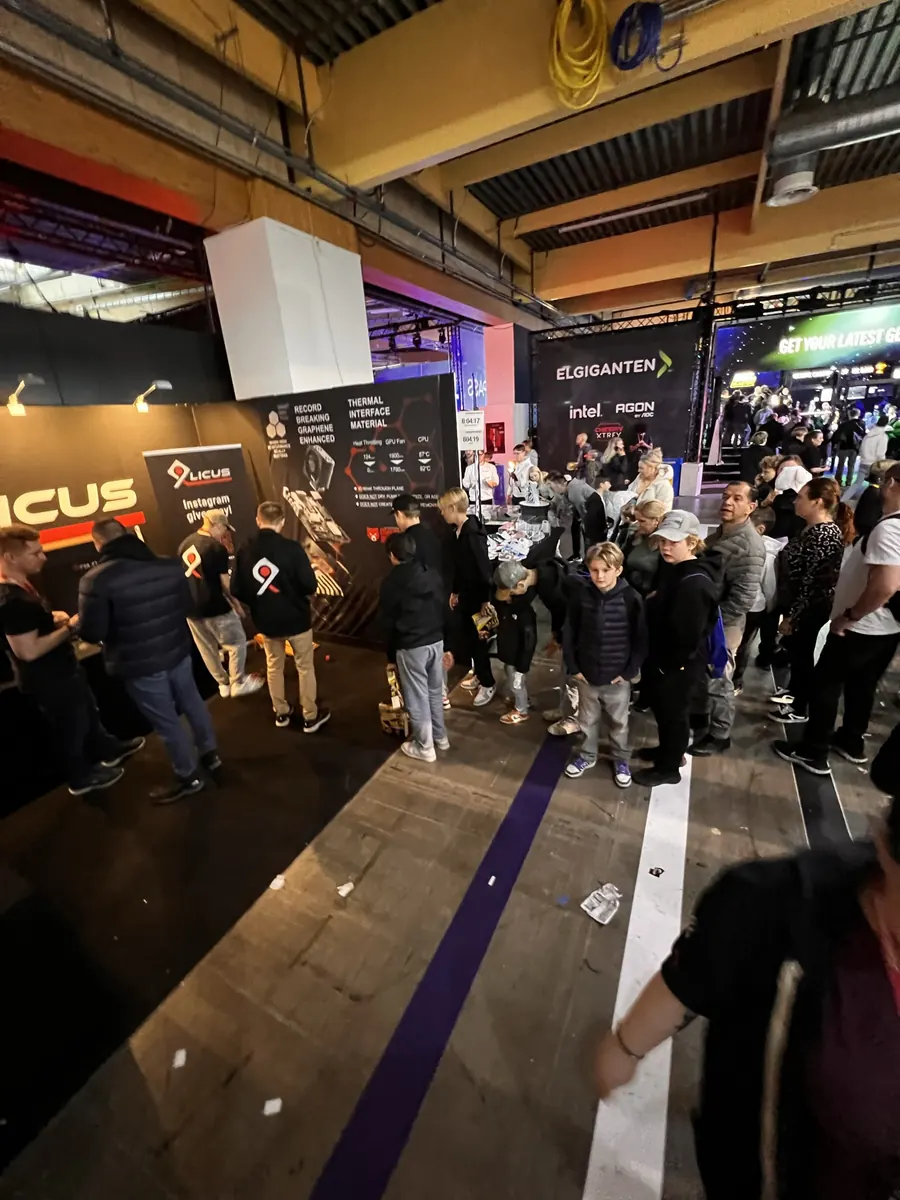
A crowd in front of the Olicus booth at DreamHackOcta V1 lit up on the booth table, next to a cosplayerVisitors trying the booth at DreamHackThe Olicus booth at DreamHack, with the partner screen

DreamHack

DreamHack 2023

Thousands came to see it up close

2M

views on social media

1,900+

comments from the community

5,000

visitors at our DreamHack booth

Previous collaborators

Not made overnight

16prototypes

4 versions

  1. Geometric assurance
  2. Mechanical engineering
  3. CFD simulation
  4. Controlled thermal testing
  5. Product review

Proof: the RISE stress test and the CFD simulation

Tested by RISE

Same parts, three cases

Octa V1Fractal Design Meshify 2Corsair 7000D

CPU scoreHigher is better

1595

GPU scoreHigher is better

26058

CPU under loadLower is better

88°C

GPU under loadLower is better

43.4°C

CFD simulation

Let the heat settle
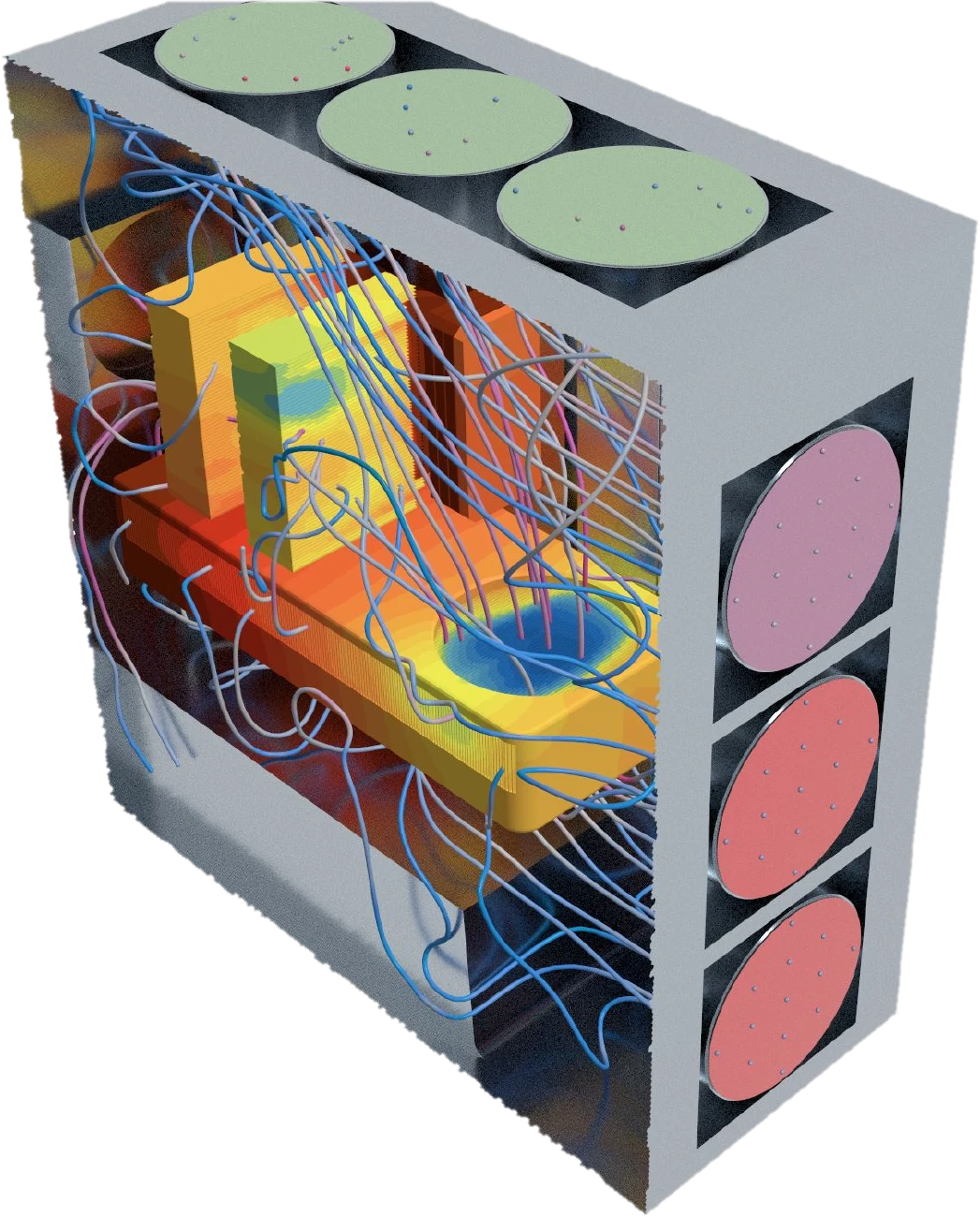
Corsair 7000D model, air paths, CFD simulationCorsair 7000D
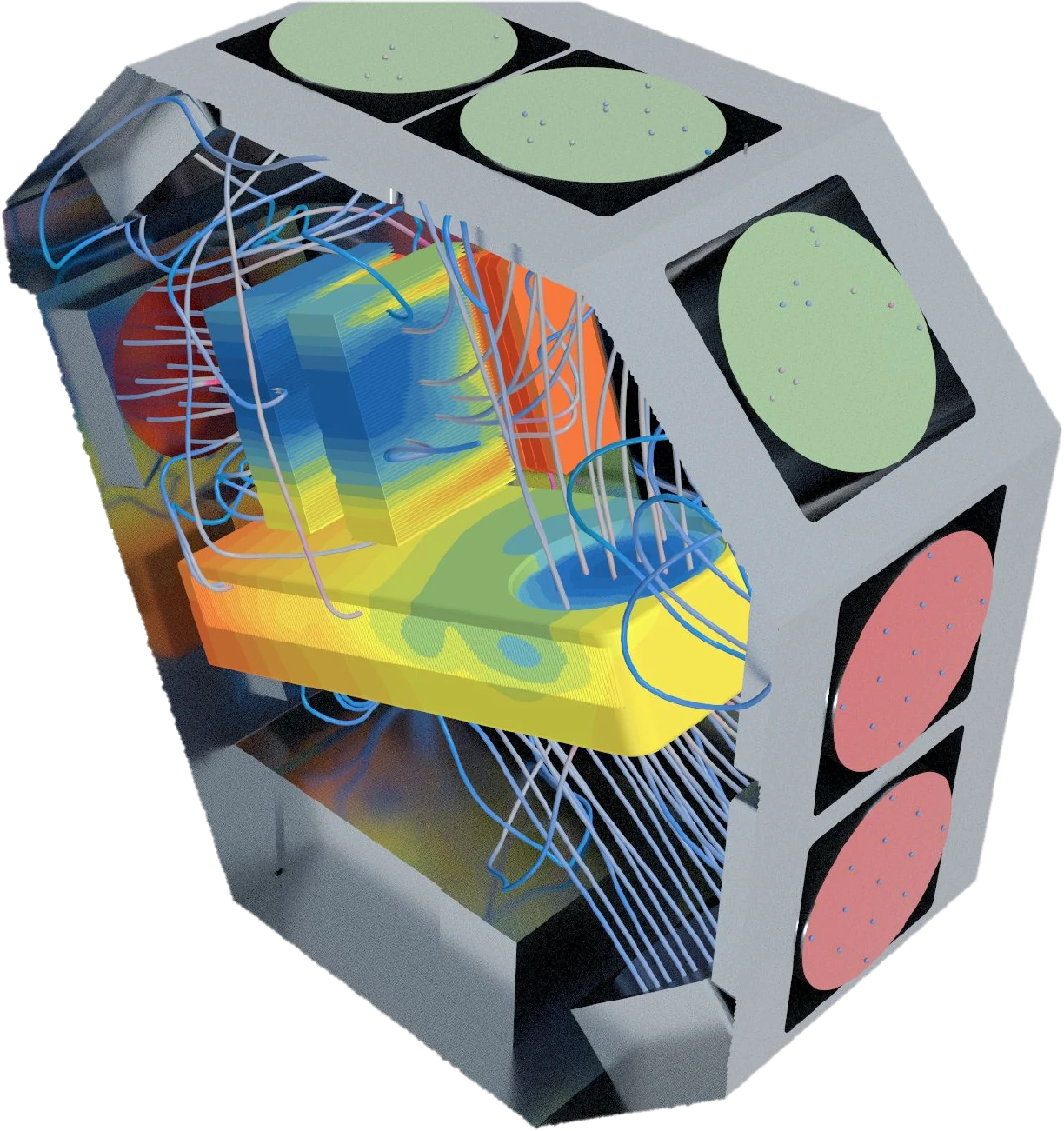
Octa V1, air paths, CFD simulationOcta V1

CFD simulation

Let the heat settle
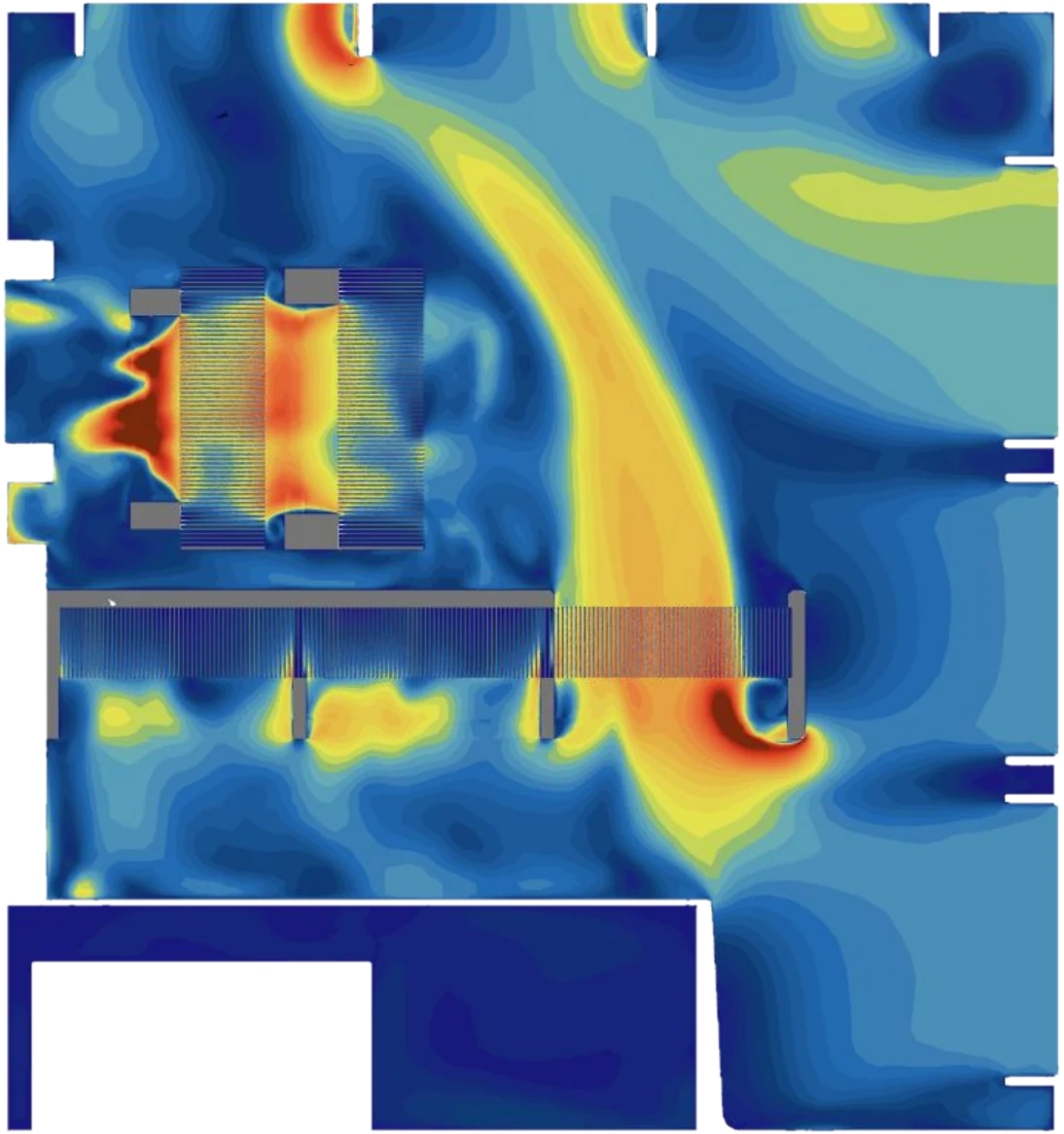
Corsair 7000D model, air speed, CFD simulationCorsair 7000D
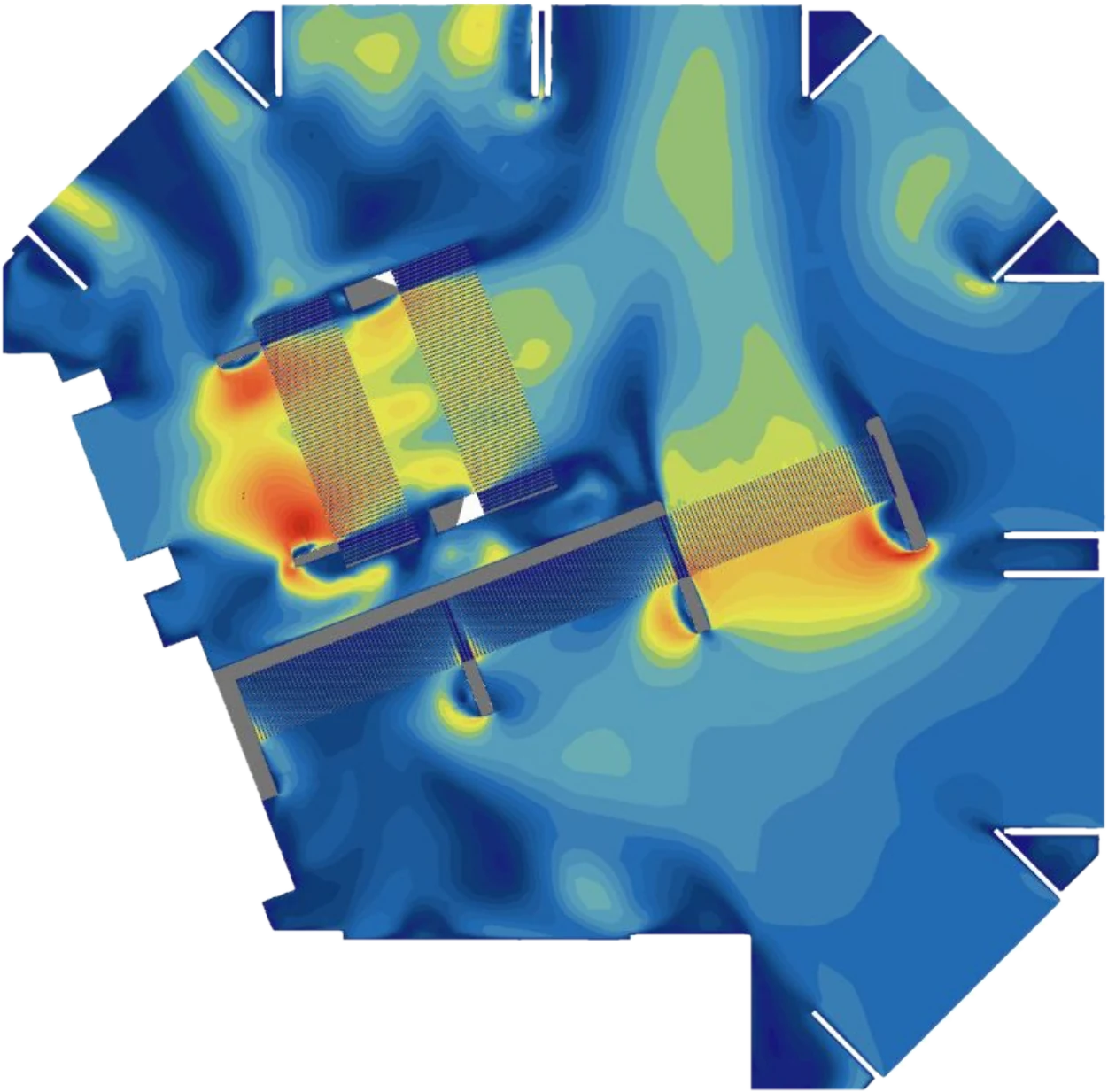
Octa V1, air speed, CFD simulationOcta V1

CFD simulation

Let the heat settle
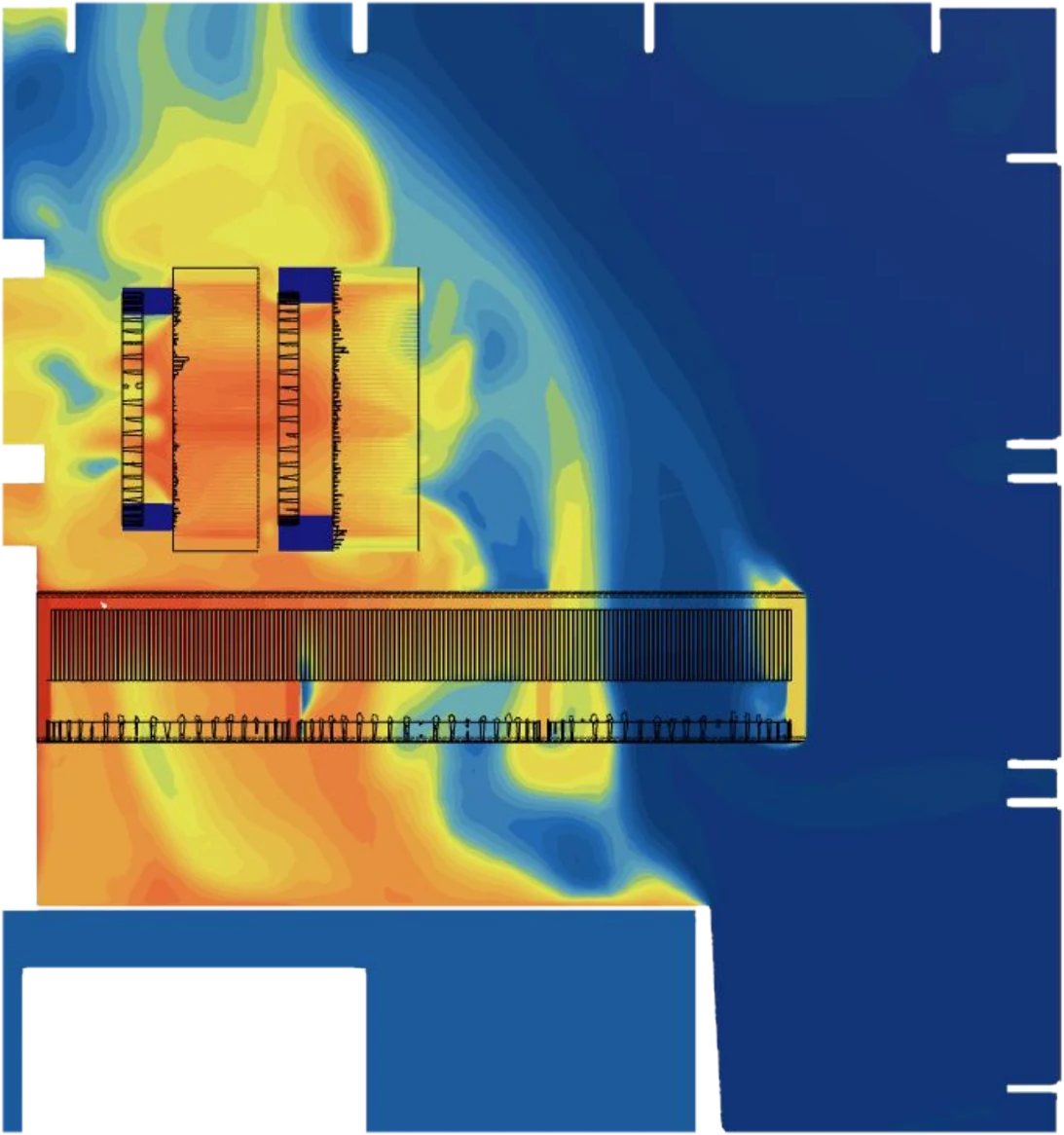
Corsair 7000D model, heat, CFD simulationCorsair 7000D
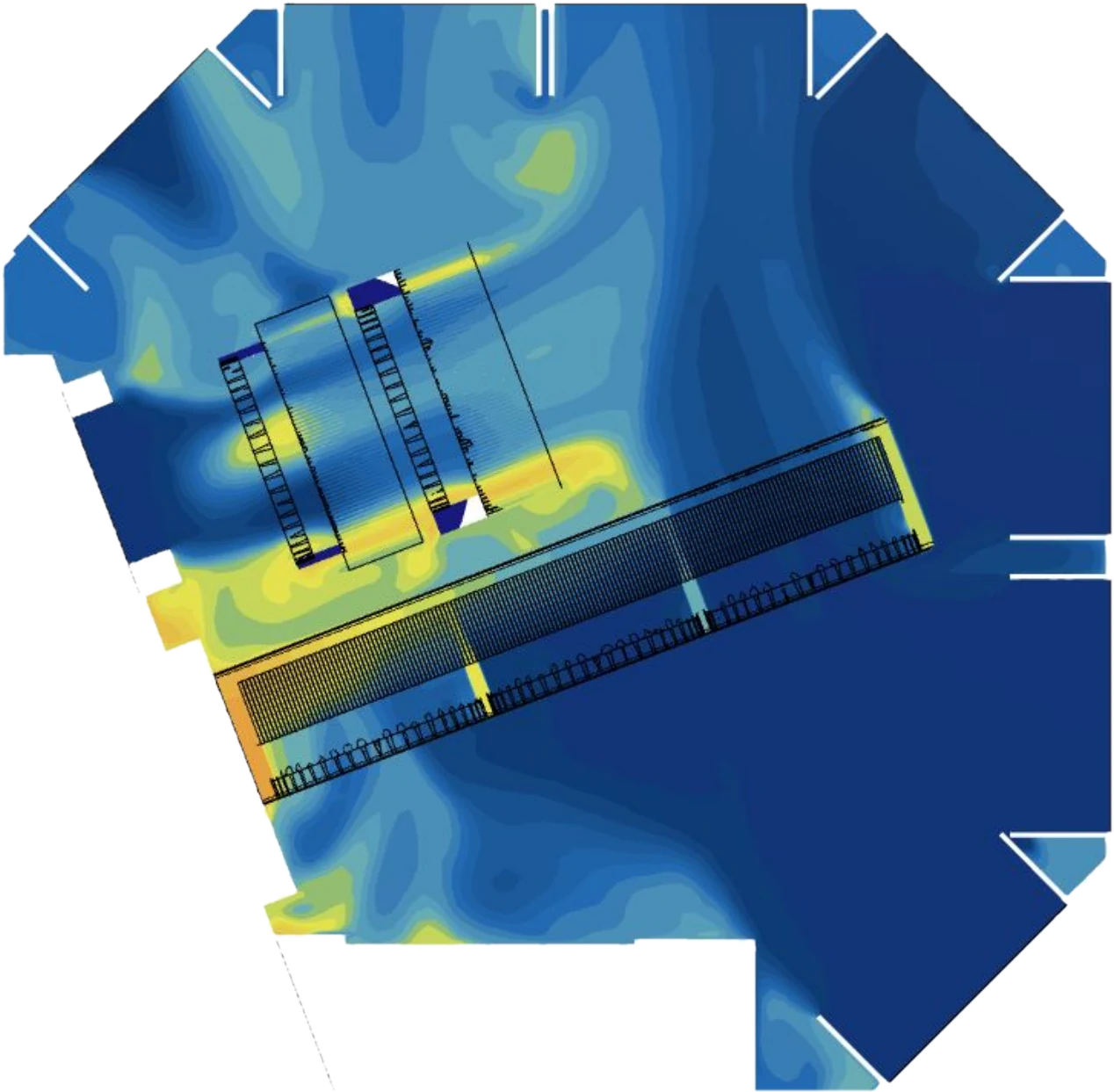
Octa V1, heat, CFD simulationOcta V1

CFD simulation, both cases at steady state

At steady state

Simulation: CPU 170 W, graphics card 575 W. Octa V1 with 4 intake fans, the 7000D with 3. Measured at the coolers.

87.47000D
71.0Octa V1

16.4 °C cooler

CPU

71.87000D
57.3Octa V1

14.5 °C cooler

GPU

73.27000D
64.0Octa V1

9.2 °C cooler

RAM

Test details

RISE Research Institutes of Sweden, test report P121452, 19 to 20 December 2024. One set of parts moved between the three cases: Intel Core i7-13700K, Asus GeForce RTX 4080 TUF OC 16 GB, Noctua NH-D15, six Noctua NF-A12x25 at 50% fan speed, Asus TUF Gaming Z790-Plus, 2 × 16 GB DDR5, Samsung 990 PRO, Asus TUF Gaming 1000 W. Room held at 22.5 °C. 10 minutes idle, 10 minutes GPU stress, 10 minutes CPU stress, Cinebench 2024.1.0. Fans placed the same way in each case, no dust filters. Noise was not measured.

CaseTestCPU °CGPU °CCPU scoreGPU score
Octa V1Idle3429.1
Stress8843.4159526058
Fractal Design Meshify 2Idle3530.1
Stress8846.1154326004
Corsair 7000DIdle3531.5
Stress8945.1154625923

Simulation details

Computational fluid dynamics simulation of the cooling, run to steady state. Heat sources: CPU 170 W, GPU 575 W, RAM 4 × 3 W. The comparison case is a simplified model of the Corsair 7000D. Octa V1 with 4 intake and 4 exhaust fans, the 7000D with 3 intake and 4 exhaust fans. Temperatures are of the coolers, not the chips. Simplified model: board slots and small openings sealed.

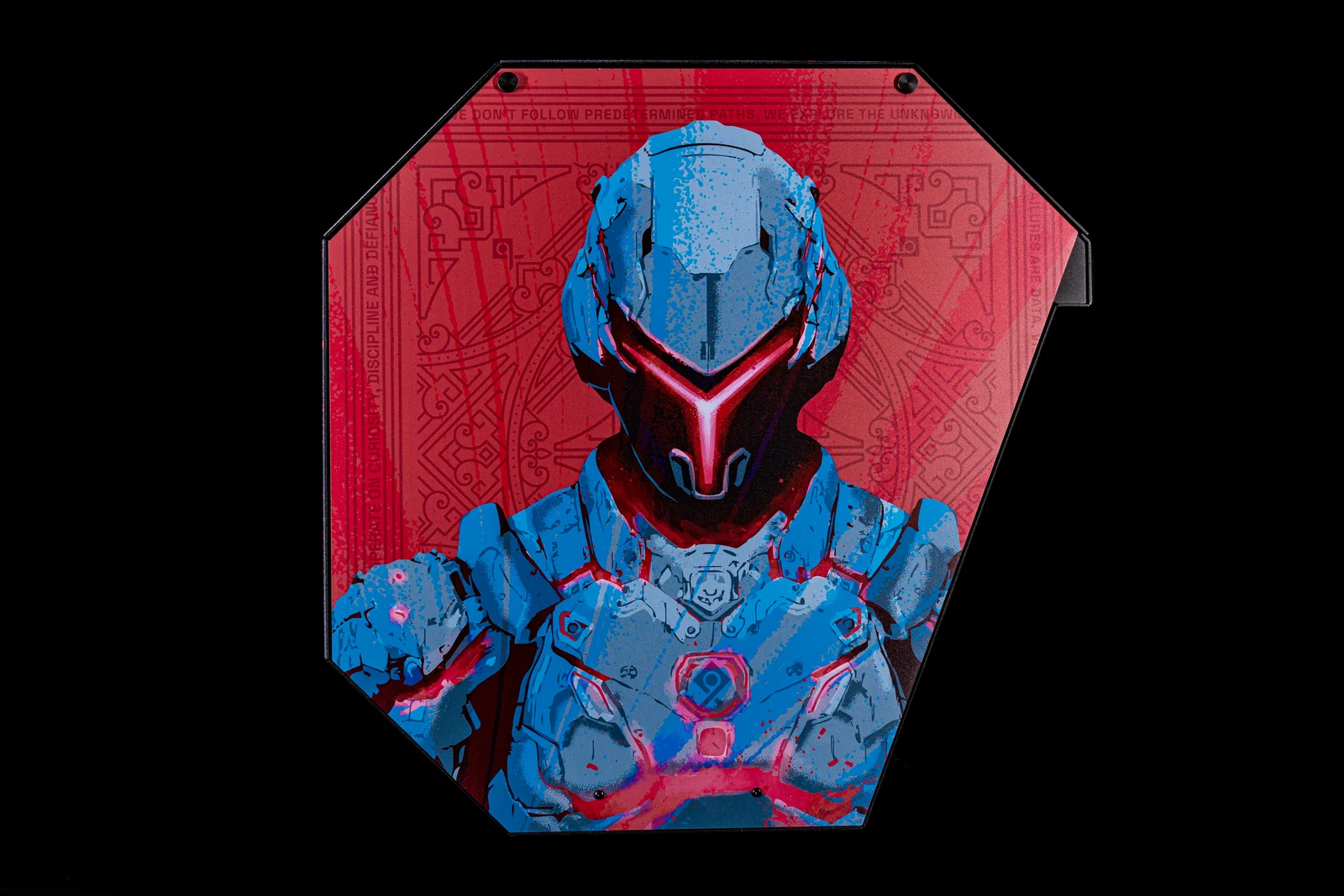
Octa V1 with a printed side panelA printed Octa V1 side panel, straight onOcta V1 with printed panels, seen from the front corner

Modular

Panels off by hand

Specs

Fans and radiators

Octa V1 specs

Size
592 × 605 × 294 mmLength × height × width, feet included
Motherboard
ATX, Micro-ATX, Mini-ITXBack-connector boards fit too: BTF, Project Zero, Project Stealth
Graphics card
Up to 420 mm longUp to 3 slots thick
GPU support bracket
Included
CPU cooler
Up to 175 mm tallFits most popular air coolers
Fans
Up to 8 fans7 × 140 mm and 1 × 120 mm at the rear. Every 140 mm mount takes a 120 mm fan too
Radiators
2 × 240 mmOne in the front, one in the roof
Storage
4 × 2.5" SSDTwo in each bracket behind the tray
Front I/O
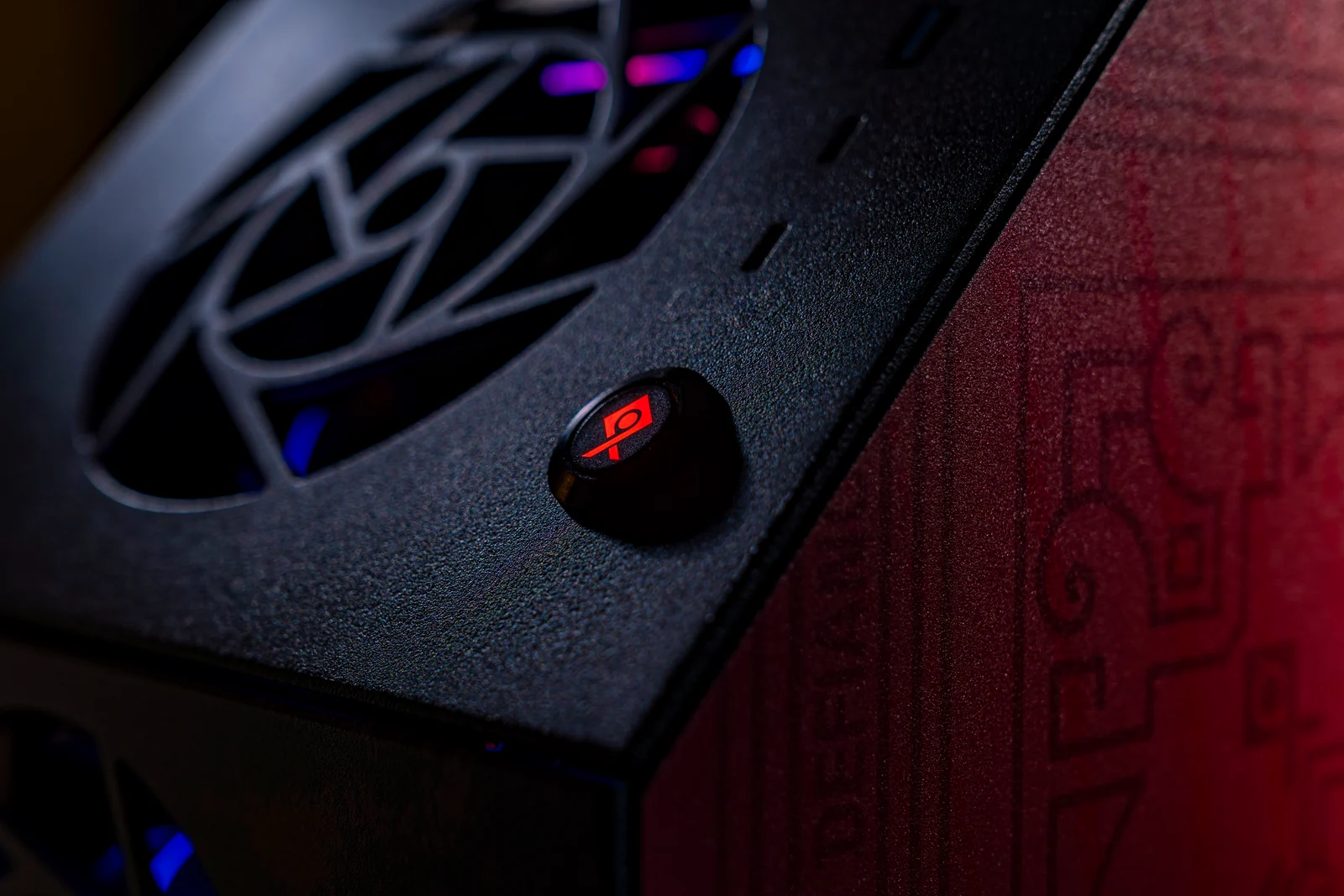
2 × USB-A, 2 × USB-CPower button on the front panel
Side panel
Tempered glass
Outer panels
Magnetic, tool-less, removableNo tools: lift one off, press it back on
Dust filters
Nylon mesh behind every panel

Features and technical descriptions are not final and can change until release.

The relaunch

We listened

A lot of you wanted an Octa V1, but the price was too high for most. So we changed where it’s made and kept everything that makes it an Octa.

Changed

  • New manufacturer
  • No longer made in Sweden

Kept

  • The octagon
  • The airflow
  • Modularity
  • Customisation
  • RISE and CFD results

Every pre-order was refunded in full.

Questions

Is joining a pre-order?

No. It’s free. You hear first when Octa V1 can be ordered, and decide then.

When can I buy it, and what will it cost?

Not set yet. We're bringing Octa V1 back with a new manufacturer to make it more affordable. Be on the list and you’ll get the date and the price first.

Will my parts fit?

Full ATX builds fit. ATX, Micro-ATX and Mini-ITX boards, back-connector boards too (BTF, Project Zero, Project Stealth). Graphics cards up to 420 mm long and 3 slots thick, CPU coolers up to 175 mm, up to 8 fans and two 240 mm radiators.

How well does it cool?

Tested independently by RISE. Same parts in three cases, fans at 50%, 10-minute stress test: Octa V1 had the coolest graphics card, at 43.4 °C, and matched the best CPU result, at 88 °C. Noise was not measured.

Why is it shaped like an octagon?

The air drew it. The angled walls and corner fans aim cool air straight at the hot parts.

Why is the motherboard angled?

Three reasons. Better airflow, better use of space and less GPU sag.

Is it easy to build in?

Every outer panel but the glass lifts off by hand. They hold on with magnets, so you reach every side of the build without tools. A dust filter sits behind each one.

What makes it modular?

The whole case comes apart. It’s built with press screws and nuts, so every part can be replaced, upgraded or made your own.

I saw Octa V1 before. What changed?

A new manufacturer, to make it more affordable. The octagon, the airflow, the modularity and the test results stay. Every pre-order was refunded in full.

What will you send me?

Only Octa V1 news. Confirm your email with one button, and leave any time in one click.

Octa V1 The shape is the cooling

Join the Octa V1 waitlist

Features and technical descriptions are not final and can change until release.

Octa V1

Why this shape?

01 · The box

Born on an office desk

The PC case was born in the early 80s as an office machine. A rectangle made sense: flat steel bends easily into a box, and boxes ship and stack well.

The first IBM PC ran on a 63.5 W power supply, so the parts barely got warm.

02 · What changed

Same box, hotter parts

The parts changed. One graphics card today can draw 575 W, about nine times that whole first PC.

The box stayed. The fix became more holes, more fans and more glass.

03 · What we believe

Start with the problem

At Olicus we think a product should be built for the problem, not tweaked to fit it.

So we started with a blank page and two questions: where does the heat come from, and where does the air need to go?

04 · What we found

The octagon is what the air drew

We let the air decide. Cool air comes in low and goes straight at the graphics card and CPU. Warm air rises and leaves through the roof.

The angled corners hold fans aimed right where the heat is. Follow those air paths and you get eight sides.

05 · The proof

Then we tested it

16 prototypes and 4 versions later, we had it tested. RISE ran it against two well-known cases with the same parts, and a CFD simulation showed where the air goes.

See the proof

06 · What’s next

The first step out

Is the octagon the perfect shape for airflow? Probably not. It’s the best we could build today.

And the industry is already moving: new cases add angled fans and air ducts to aim the air where the heat is. We love to see it. In Octa V1, the shape itself does the aiming.

We went into the unknown and brought this back. Now we can’t wait to see where everyone takes it.

Explore the Unknown

Join the waitlist

Octa V1

Why is the motherboard angled?

01 · The short answer

Three reasons, one angle

Tilting the motherboard gives the air a better path, uses the space better and takes weight off your graphics card.

02 · Airflow

A clear path for the air

Your graphics card sits higher above the floor of the case, so its fans have room to breathe.

The angle lines the card up with the intake fans, so cool air hits the GPU fans head on. Warm air follows the slope up and leaves through the roof, right where we want it.

03 · Space

Every corner earns its place

Octa V1 is a big case, but it uses its space diagonally. A tilted board fits more into the same room than a flat one would.

That’s also why the corners are cut. In a square case the corners sit empty, and those 90° pockets trap air and stir it into turbulence. We cut them off and put fans there instead.

04 · GPU sag

Less weight on the slot

Graphics cards today are heavy, and that weight pulls on the PCIe slot until the card starts to sag. Octa V1 comes with a GPU support bracket, but we wanted to go further.

With the board tilted, part of the card’s weight leans back toward the bracket at the rear of the case. The slot carries less, and the card sags less.

See the airflowJoin the waitlist

Octa V1

What makes it modular?

01 · The short answer

Modular all the way down

Modular is more than a panel in a new colour. The whole of Octa V1 is built to come apart: the frame, the panels and the brackets all hold together with press screws and nuts.

02 · No rivets

Every part can come off

Most cases are riveted together, and a rivet is there for good.

Octa V1 uses press screws and nuts throughout, so every part can come off again, as many times as you like.

03 · Made for makers

Built for creators and modders

Because every part bolts on, creators and modders can make new parts that fit straight onto the frame.

Swap a bracket, design a new panel, or build something we never thought of.

04 · Made to last

Repair it, upgrade it, keep it

A broken part is one part to replace. When new hardware comes out, the case can change with it.

Octa V1 is built to grow with your setup, year after year.

05 · One more thing

You read this far, so here’s a hint

Something is coming to this design: a whole new way to create and share your own parts.

It puts the future of Octa V1 in your hands. What it becomes, and what it can do, will be up to the people who build on it.

Join the waitlist

Octa V1

Why magnets?

01 · The short answer

Built to be changed

Magnets let you swap a panel in seconds, and there’s nothing on them that can break.

02 · The harder road

We picked the expensive option

Clips would have been easier and cheaper to build.

But modularity is the whole point of Octa V1, so we pushed it as far as we could.

03 · Any panel, any time

Lift it off, press it on

A panel only has to fit the frame. Print your own, paint one or swap in a new design.

No tools, no screws, done in seconds.

04 · Nothing to snap

Made to last

Plastic clips wear out and snap. When one breaks, that panel often won’t sit right again, and part of the case is done for.

A magnet has nothing to snap, so your panels keep working year after year.

See the panelsJoin the waitlist